
Wristbands for Marathons and Charity Runs in Kenya
Race-category wristbands, zone access on race day and silicone wristbands that raise money for your cause: a planner's guide for marathons and charity runs in Kenya.
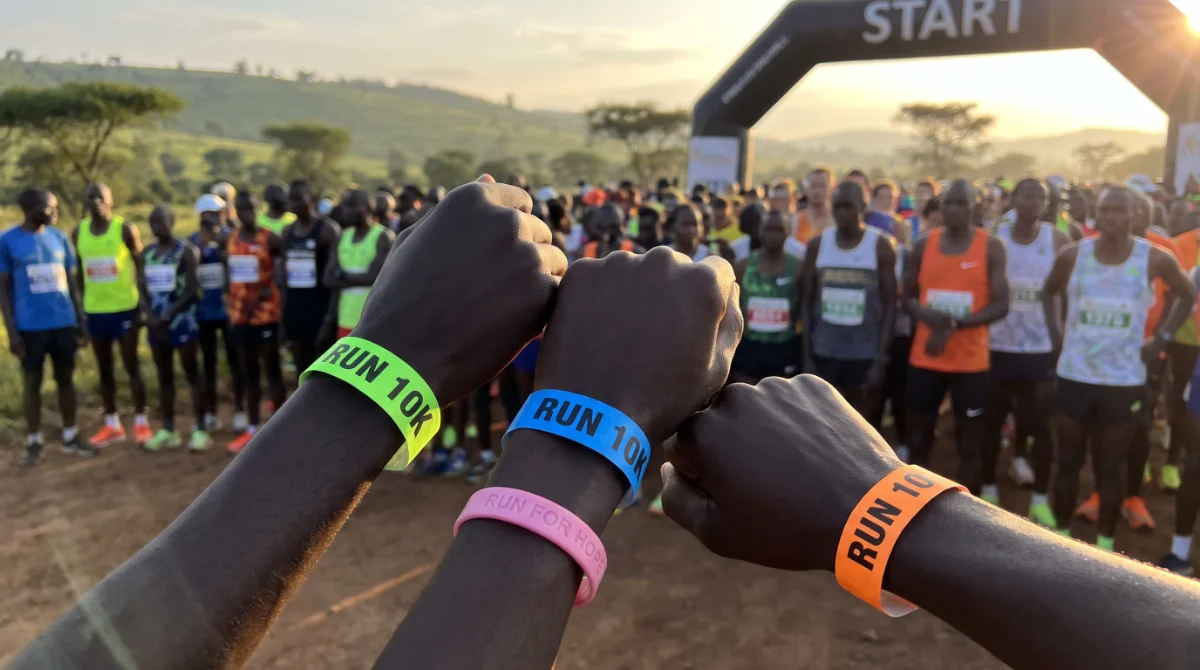
Kenya runs. From city marathons and county half-marathons to school fun runs, hospital fundraisers and corporate 5K challenges, there is a road race somewhere in the country almost every weekend. Behind each one is an organising team trying to answer the same practical questions: how do we tell the 10K runners from the 21K runners, who is allowed into the start pens and the hospitality tent, and how do we raise more money for the cause the run is supporting?
Wristbands answer all three. This guide is for race directors, charity committees and corporate CSR teams planning a run anywhere in Kenya. It covers the jobs a wristband does on race day, which material suits which job, how to colour-code categories, how to use silicone wristbands for fundraising, and how to plan quantities and distribution.
Three jobs a wristband does at a race
Bib numbers identify individual runners, and timing chips record their times. Wristbands do something different: they let marshals, volunteers and security staff see at a glance what a person is entitled to, without reading a number.
Participant and category identification
Most runs offer more than one distance. A charity run might have a 5K fun run, a 10K and a 21K half-marathon all starting from the same venue. When runners are funnelled into the wrong start pen, the race starts late and the results get messy.
A coloured wristband for each distance solves this. Marshals at the start can wave through anyone with the right colour, and course marshals at turning points can direct 10K runners back towards the finish while 21K runners carry on. Because wristbands stay on throughout the race, they also help at the finish line, where medal and refreshment queues are often split by distance.
Zone access: start pens, hospitality and medical areas
Larger races have areas that not everyone should enter: an elite start pen, a sponsors' hospitality tent, a VIP finishing area, a baggage drop or the medical tent. Volunteers and crew need access to some of these zones, and runners' families need to be kept out of others.
Wristbands make zone control simple. One colour for runners, another for volunteers, another for media and another for sponsor guests is easy for gate staff to check from a distance, even when the area is busy. Our guide to VIP zoning and colour-coding with event wristbands goes into more detail on planning zones and colours.
Fundraising and finisher keepsakes
Charity runs have a third job: raising money. Here the wristband is not an access pass but a product in its own right. A silicone wristband printed with the cause, the race name and the year can be sold to runners and supporters, given as a thank-you for a donation, or handed out at the finish as a keepsake. Many people keep wearing them for months, which carries the message long after race day.
Tyvek® for race day vs silicone for the cause
Different jobs suit different materials, and many races use two types of wristband.
DuPont™ Tyvek® wristbands are the practical choice for race-day identification and access. They are lightweight and water-resistant, and they close with a tamper-evident adhesive tab, so they cannot be slipped off and passed to someone else without visibly damaging the closure. They are printed with your race name, the distance or zone and, if you want, a sponsor logo. Sequential numbering, barcodes and QR codes are available on request. Because they cost little per piece, you can issue one to every runner, volunteer and guest. See our branded Tyvek® wristbands for colours and printing options.
Silicone wristbands are the keepsake and fundraising choice. They are stretchy, comfortable for long wear and durable enough to last well beyond race day. The message can be debossed into the silicone, printed on the surface, or both. Our custom silicone wristbands and screen-printed silicone wristbands cover the main styles.
A typical combination is a Tyvek® wristband issued at race-pack collection for identification and access, plus a silicone wristband sold for the cause or given to every finisher.
For a fuller comparison of materials, our guide to choosing the right wristband for your event compares Tyvek®, fabric and silicone side by side.
Sweat, rain and long distances: what holds up
A runner wearing a wristband for a 21K or 42K race puts it through more than a concert-goer does. Sweat, water poured over the head at drink stations, rain on an early-morning start and constant arm movement all test the material.
- Tyvek® is water-resistant and keeps its print through a wet race, provided the wristband is fastened snugly. Ask volunteers to close it close to the wrist, with room for one finger, so it does not rub.
- Silicone does not absorb sweat and simply wipes clean, which is why runners often keep wearing it to training afterwards.
- Avoid paper or card wristbands for anything longer than a short fun run. They soften when wet and can tear before the finish.
Ask runners to wear the wristband on the opposite wrist to their watch. It is more comfortable, and it keeps the wristband visible to marshals.
Colour-coding categories and corrals
Colour is your fastest signal on a busy race morning, so plan it before you order.
- Give each race distance its own strong colour, for example green for 5K, blue for 10K and orange for 21K.
- Avoid using colours that look alike in bright sunlight, such as two shades of blue, or red next to orange.
- Keep volunteer and crew colours clearly different from runner colours, so a runner cannot be mistaken for crew at a restricted area.
- If you run staggered start waves for a large field, add the wave letter or number to the print rather than buying more colours.
- Print a simple colour key on the race information sheet and at the start-pen entrance, so runners and volunteers know the system.
Fundraising: planning a silicone wristband for donations
A cause wristband works best when the message is short and the reason to buy is clear. A two- or three-word slogan and the name of the cause read better on a 12 mm wristband than a long sentence. If you have a longer message, put the slogan on the front and the website or hashtag on the back.
Decide early how the wristbands will raise money. Some organisers include one in every registration fee. Others sell them at race-pack collection and on race day for a suggested donation. Corporate sponsors sometimes buy wristbands in bulk to give to their staff who take part. Whichever model you choose, order enough for runners, volunteers and supporters, plus a reserve for sales after the event.
Colour carries meaning for many causes, such as pink for breast cancer awareness. If your cause has an established colour, use it, and give us the Pantone reference so it matches the rest of your campaign materials.
If you are not sure whether your logo or slogan will fit, our guide on how to prepare your logo for printing on merchandise explains the minimum sizes for wristbands.
Ordering timeline and quantities for a run
Work backwards from race-pack collection, not race day, because that is when most wristbands are handed out.
- Six to eight weeks before: confirm distances, zones and colours. Agree the wording and collect logos from the organiser and sponsors.
- Four to five weeks before: send artwork, approve the digital proof and place the order. Orders are delivered in 1–5 days, but leaving extra time protects you if the sponsor list or wording changes.
- One week before: count the wristbands into packs by distance, ready for race-pack collection.
For quantities, take your registration numbers for each distance and add a reserve of around 10 percent for late entries and replacements. Add volunteers, crew, media and sponsor guests separately by role. For cause wristbands, plan on runners plus the number of supporters you expect to sell to, and keep some back for the weeks after the race.
The bulk discount applies too: orders of KES 10,000 or more receive 5% off.
Distribution at race-pack collection
The easiest moment to fit a race wristband is when runners collect their bib and race pack. Fit the Tyvek® wristband at the collection desk, so runners arrive on race day already wearing the right colour. This shortens queues on race morning, when time is tightest.
Keep a separate desk or box for volunteer and crew wristbands, and record who has received one. On race day, place a small team with spare wristbands at the start-pen entrance to handle late registrations and anyone who removed theirs.
If you are selling cause wristbands, put them where people already queue: at race-pack collection, by the finish-line refreshments and at the medal table. Runners who have just finished are proud of their achievement and are often happy to buy one.
For race rules, permits and course standards, check with Athletics Kenya, and for international road-race guidance see World Athletics Label road races.
A well-run race feels effortless to the runners, and wristbands do a lot of that quiet work: they get each runner into the right pen, keep the hospitality tent calm and, for a charity run, keep the cause visible on people's wrists long after the last runner crosses the finish line. Tell us your distances, numbers and cause, and we will help you plan the colours, wording and quantities for race day.
Planning event wristbands, staff lanyards, or corporate apparel in Kenya? You can share your design ideas with us directly on WhatsApp for quick digital mockups and pricing.