
Which Lasts Longer Between a Heat Press Vinyl and Dye Sublimation on T-Shirts or Polo Shirts?
Heat press vinyl vs dye sublimation on t-shirts: which lasts longer? Discover why some prints crack after 3 washes while others survive 100+ cycles.
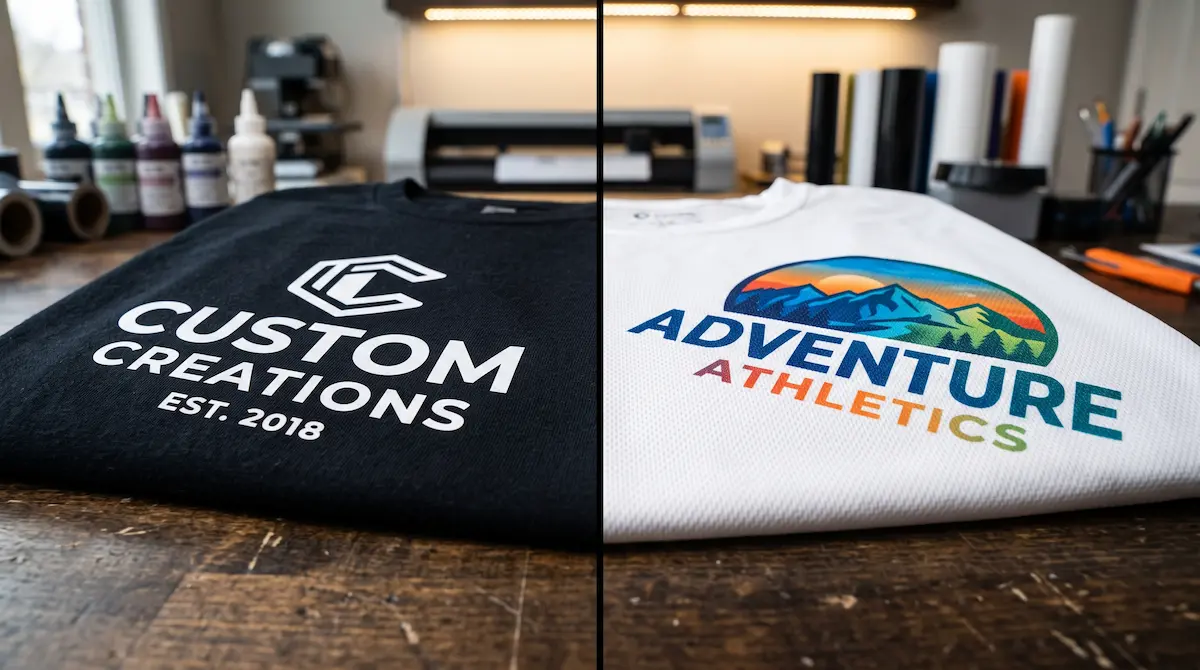
Two printing methods dominate custom t-shirts and team kits in Kenya: heat press vinyl, where a cut film is pressed onto the surface of the fabric, and dye sublimation, where dye is turned into gas and absorbed into polyester fibres. Both can look sharp on the day they're printed. The difference shows up weeks later in the wash, and it depends almost entirely on what the garment is made of.
This guide compares the two methods on wash durability, fabric compatibility, feel, special finishes and cost, looks at where direct-to-film (DTF) printing fits in, and ends with a simple rule for choosing the right method for cotton staff tees, polyester sports kits and everything in between.
1. The Core Mechanical Difference: Surface Film vs Molecular Infusion
To understand which print method outlasts the other, you must inspect what happens at the microscopic fiber level. The fundamental distinction between heat press vinyl and dye sublimation lies in where the graphic lives: sitting on top of the weave, or trapped deep inside molecular polymer chains.
Heat Press Vinyl (HTV / PU Flex): A Pliable Surface Shield
Heat transfer vinyl (HTV) is a precision polyurethane film backed by heat-activated adhesive. A computerized vector cutter uses an ultra-fine blade to cut logos, text, or numbers out of the vinyl roll. After technicians weed away excess material, the graphic is pressed onto the garment at 155°C to 165°C under 4 to 5 bars of pneumatic pressure for 12 to 15 seconds.
Under heat, the solid adhesive liquifies, flowing around uppermost cotton fibers before cooling into a tight mechanical grip. However, the vinyl remains an external layer resting on the fabric surface. You can physically feel the smooth edge with your fingertips. High-grade PU vinyl stretches as the wearer moves, but remains subject to surface friction and thermal wear.
Dye Sublimation: The Science of Molecular Gas Infusion
Dye sublimation takes an entirely chemical route. Instead of laying down a plastic film, sublimation uses specialized heat-activated disperse dye inks printed in reverse onto coated release paper. The paper is pressed onto the garment at 195°C to 205°C for 45 to 60 seconds.
At this extreme temperature, two physical phenomena occur simultaneously:
- The dye skips the liquid state completely: Through sublimation, solid pigment instantly converts into an ultra-fine penetrating gas.
- The polyester polymer chains open wide: Intense heat causes synthetic polyester fibers to relax, opening microscopic receptor pores.
- Permanent molecular bonding: Gaseous dye infuses straight into open pores. As the fabric cools, polyester pores snap shut, permanently trapping dye inside the fiber core.
The result is zero hand feel. You cannot feel where the fabric ends and the graphic begins. The dye has literally become an inseparable part of the shirt yarn itself.
2. Wash Durability Showdown: How Many Cycles Do They Really Last?
When corporate buyers ask our team which method lasts longer in daily use, we look directly at empirical wash-test endurance.
Heat Press Vinyl Durability: 40 to 60+ Washes
When pressed with commercial-grade polyurethane film on calibrated equipment, quality heat press vinyl routinely delivers 40 to 60+ complete wash cycles before showing minor wear. Premium Korean and Italian PU flex films contain elastic plasticizers that allow the print to stretch with the garment knit without tearing.
However, vinyl has physical limitations. Continuous exposure to hot water (above 40°C), harsh detergents, and high-heat drying cycles will soften the glue line. Over time, mechanical tumbling creates micro-shearing forces between cotton fibers and the vinyl edge, causing edge curling or hairline cracks.
Dye Sublimation Durability: 100+ Washes
Dye sublimation represents the absolute pinnacle of textile print longevity. Because there is no external film, no adhesive layer, and no ink crust on the surface, dye sublimation does not crack, peel or flake off like vinyl can.
Because sublimation dye sits inside the polyester fibres, sublimated prints hold their colour well through repeated washing. Colourfastness is tested to standards published by the AATCC (American Association of Textile Chemists and Colorists).
3. The Fabric Catch: Why 100% Cotton vs Polyester Changes Everything
Reading the wash-cycle scores above might tempt you to declare dye sublimation the undisputed victor of heat press vinyl vs dye sublimation on t-shirts: which lasts longer? But before placing an order, you must confront the single biggest pitfall in apparel decoration: fabric chemistry compatibility.
Sublimation’s Fatal Flaw: The 100% Cotton Trap
Dye sublimation requires synthetic polyester polymers to create a molecular bond. Natural cellulose fibres, such as 100% cotton, combed ringspun cotton, or natural linen, completely lack polyester receptors. If you attempt to sublimate onto a 100% cotton shirt, the gaseous dye has nothing to latch onto; it merely rests loosely on raw fibers like colored dust. The very first time the shirt hits soapy water, the entire design washes straight down the drain.
To use sublimation effectively, your garment must contain at least 65% polyester (with 100% micro-polyester dry-fit delivering the sharpest, most saturated colors). Furthermore, sublimation inks are transparent. Because there is no white sublimation ink, the process only works on white or light-colored pastel fabrics. If you try to sublimate on a black polyester shirt, the dark background absorbs all light, rendering your print invisible.
Heat Press Vinyl: The Undisputed King of 100% Cotton & Dark Garments
This is precisely where heat press vinyl dominates the Kenyan apparel market. Because PU vinyl is an opaque, self-contained solid film, it adheres equally well to virtually any tightly woven textile: 100% combed cotton, heavy poly-cotton blends, fleece hoodies, canvas tote bags, and nylon windbreakers.
Even more importantly, heat press vinyl delivers total opacity on deep black, midnight navy, and forest green garments. A snow-white vinyl graphic or an electric neon logo pressed onto a heavy black cotton crewneck looks startlingly vivid, completely blocking out the dark fabric underneath.
- For heavy-duty corporate crewneck uniforms, explore our premium 100% cotton custom branded t-shirts optimized for crisp vinyl cutting and vibrant transfers.
- For executive winter wear, cold-season events, and campus merchandise, browse our heavy-weight fleece branded hoodies. For a full buyer's guide, see branded hoodies for teams, schools and staff.
- When outfitting running clubs, marathon teams, or soccer academies, check out our moisture-wicking custom sports jerseys built for vibrant, permanent sublimation.
4. Engineering Comparison: Heat Press Vinyl vs Dye Sublimation
To help you quickly weigh trade-offs for your upcoming production run, the matrix below compares mechanical properties, durability thresholds, fabric limitations, and cost profiles side by side:
| Technical Feature | Heat Press Vinyl (PU Flex) | Dye Sublimation | Direct-to-Film (DTF Hybrid) |
|---|---|---|---|
| Bonding Mechanism | Hot-melt adhesive film on surface | Molecular gas infusion into fiber | Polymerized adhesive powder base |
| Expected Wash Longevity | 40 to 60+ domestic cycles | 100+ cycles (long-lasting) | 50 to 70+ domestic cycles |
| Fabric Compatibility | 100% Cotton, Poly, Blends, Fleece | White/Light Polyester only (65%+) | Cotton, Poly, Blends, Dark/Light |
| Tactile Hand Feel | Smooth, flexible rubberized film | Completely zero hand feel (soft) | Thin, pliable semi-matte finish |
| Garment Color Range | Any color (superb on black) | White, light gray, pastel only | Any color (includes opaque white) |
| Special Finishes | Gold foil, glitter, reflective, puff | Standard CMYK photographic colors | Standard CMYK full photographic |
| Small Batch Economy | Exceptional (1 to 20 units) | Great for 100% poly sports kits | Low setup cost for full-color art |
| Best Nairobi Use Case | Cotton staff tees & squad numbers | Marathon dry-fit tees & cycling | Detailed multi-color cotton tees |
5. Visual Finishes & Special Effects: Where Heat Press Vinyl Shines
While dye sublimation wins on wash longevity on polyester, heat press vinyl commands an unmatched aesthetic advantage: specialty textured and visual effects.
Because sublimation only deposits translucent inks into the yarn, it cannot create metallic sheens, three-dimensional textures, or reflective properties. Heat press vinyl, however, is available in an exciting range of high-impact finishes:
- Metallic Chrome & Mirror Gold: Gives corporate commemorative shirts and executive crests a luxurious, reflective metallic sheen that catches room lighting beautifully.
- High-Visibility Reflective Vinyl: Contains microscopic glass retro-reflective beads that bounce vehicle headlight beams directly back to the source. It is the premier choice for night security teams, roadside work crews, and pairs perfectly with our branded reflective safety jackets.
- 3D Puff & Suede Flocked Vinyl: Expands under heat to create a raised, velvety 3D texture that gives streetwear and fashion brands an upscale designer feel.
- Individual Names and Squad Numbers: Because cutting plotters cut directly from vector data without creating expensive screen mesh plates, vinyl is the most cost-effective method in Nairobi for customizing sports jerseys with unique player names and numbers.
6. The Modern Alternative: Where Does Direct-to-Film (DTF) Fit In?
In recent years, many Kenyan businesses have asked about Direct-to-Film (DTF) printing as an alternative in the debate of heat press vinyl vs dye sublimation on t-shirts. DTF is an innovative hybrid technique: a digital printer sprays water-based pigment inks (including an opaque white underbase) onto a clear PET film, which is coated with hot-melt polyamide adhesive powder and cured in an oven before being pressed onto the shirt.
DTF bridges the gap between both methods. Like vinyl, DTF works on dark 100% cotton shirts and poly-cotton blends. Like sublimation, DTF reproduces complex photographic gradients, shading, and millions of colors with razor-sharp 1440 DPI resolution. With a wash life of 50 to 70+ cycles, DTF is rapidly becoming the go-to solution when corporate branding requires full-color multi-gradient logos on black cotton t-shirts without the weeding labor of vinyl.
7. The Golden Laundry Protocol: How to Double Any Printed Shirt’s Life
Regardless of whether you choose heat press vinyl, dye sublimation, or DTF transfers, how the end-user launders the garment plays a dramatic role in how many years the print remains pristine. To help your team or customers get maximum longevity out of their apparel, implement these five essential laundry rules:
- 1. Always Turn the Shirt Inside-Out Before Washing: Shields the printed surface from abrasive friction against washing machine drums, zippers, and rough rivets.
- 2. Use Cold or Lukewarm Water (Under 30°C / 85°F): High temperatures weaken polyurethane hot-melt adhesive, causing early edge lifting.
- 3. Avoid Chlorine Bleach and Concentrated Softeners: Chemical bleaches strip color vibrancy, while heavy fabric softeners deposit residues that break down adhesive bonds.
- 4. Never Iron Directly Over the Graphic: Direct contact with a hot iron instantly melts vinyl or scorches polyester. Iron inside-out or cover with a cotton pressing cloth.
- 5. Line Dry in Gentle Shade: In Kenya’s bright climate, hang shirts inside-out in partial shade to prevent prolonged ultraviolet radiation from fading fabric pigments.
8. The Final Verdict: Which Should You Choose for Your Order?
So, when weighing heat press vinyl vs dye sublimation on t-shirts: which lasts longer, what is the bottom-line recommendation for your brand?
Choose Dye Sublimation If:
- You are producing athletic wear, marathon dry-fit tees, cycling jerseys, or gym singlets on white/light polyester.
- You demand long-lasting durability (100+ washes) where the print resists cracking and peeling under heavy sweat.
- You require 100% breathability with zero hand feel across large front or all-over graphic areas.
Choose Heat Press Vinyl If:
- You are printing on 100% combed cotton, poly-cotton blends, heavy hoodies, or dark-colored garments (black, navy, charcoal).
- You need solid 1-to-2 color corporate branding, crisp chest badges, or high-contrast vector typography. For staff uniforms, see our guide to corporate polo shirts and office uniforms.
- You are ordering sports jerseys with unique squad names and numbers that vary on every piece. Our guide to custom sports jerseys for company and community teams covers names, numbers and sizing.
- You want luxury specialty effects like metallic gold, silver chrome, glitter, or nighttime safety reflective finishes.
Need Help Deciding or Want a Live Fabric Sample Proof?
The quickest way to decide is to start from the fabric. Tell us what your shirts are made of (or which of our branded t-shirts or sports jerseys you're considering), how many you need and how they'll be worn, and we'll recommend vinyl, sublimation or DTF with a free digital proof of the design. If the shirts are part of a bigger event order, our event branding checklist shows what else to plan alongside them. Contact us to get started.
Planning event wristbands, staff lanyards, or corporate apparel in Kenya? You can share your design ideas with us directly on WhatsApp for quick digital mockups and pricing.