
Exhibition Booth Checklist: Banners, Tablecloths and Giveaways
A practical checklist for trade shows and expo stands in Kenya: which banners to bring, why the tablecloth matters, giveaways people keep and what to pack the week before.
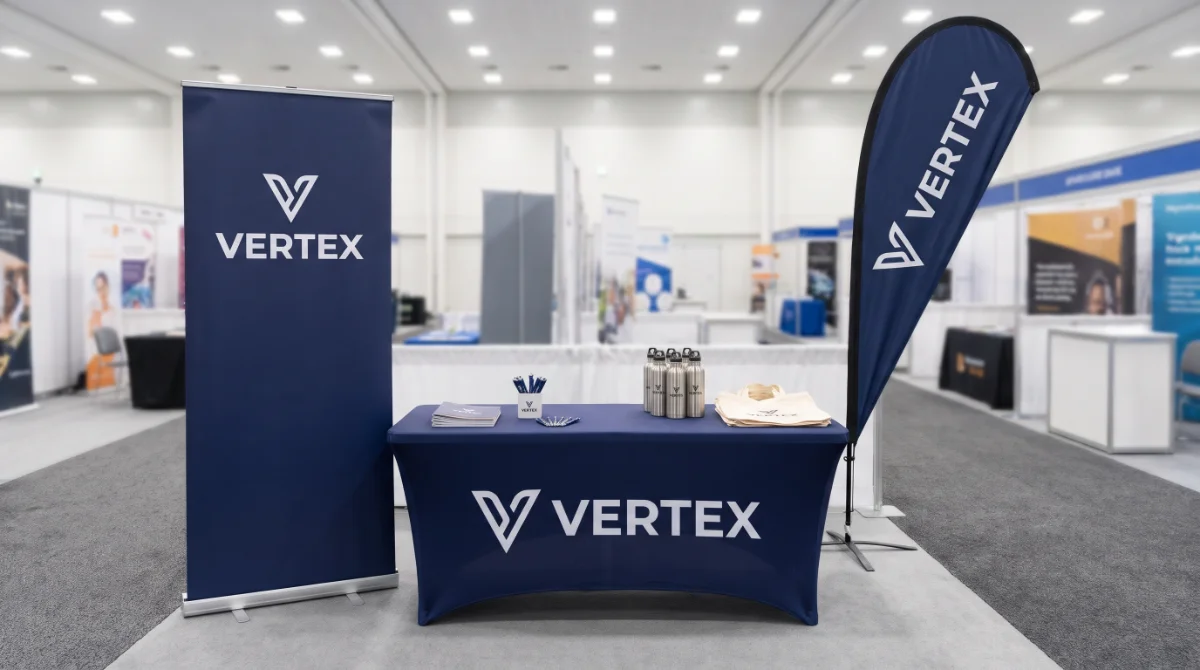
At a busy exhibition, visitors decide whether to stop at your stand in about three seconds, usually while they are still walking down the aisle. In that time they need to see who you are, what you do and that you look worth talking to. The booth that gets visitors to stop is rarely the most expensive one. It is the one that is easy to read from a distance and looks complete up close.
This checklist is for marketing teams, SME owners and sales staff preparing a stand for a trade fair, an expo, an agricultural show or a conference exhibition anywhere in Kenya. It covers how to plan the booth from the visitor's point of view, which banner types suit which space, why a branded tablecloth makes such a difference, which giveaways are worth the money, and what to pack the week before.
Plan the booth from the aisle: what visitors see first
Before ordering anything, picture the booth from three distances.
- From ten metres away, in the aisle, visitors should be able to read your name and one line about what you do. This is the job of your tallest display.
- From two metres away, at the edge of the stand, they should understand your main offer or product and see something to pick up or look at.
- At the table, they should find brochures, samples, a way to contact you and someone ready to talk.
Most booths fail at the first distance. A long paragraph of text, a logo printed too small or several competing messages all make a banner unreadable from the aisle. Keep the top half of your tallest banner for your logo and a short statement. Put the detail lower down, where people standing close can read it.
Find out your stand size and layout from the organiser early: a corner stand, an inline shell scheme stand and an outdoor space at a show ground all need different displays. If you are exhibiting at a venue such as the Kenyatta International Convention Centre, check the organiser's exhibitor manual for height limits and setup times.
Banners: roll-up vs X-banner vs teardrop
Banners are the backbone of most stands because they are tall, portable and quick to set up. Each type has a different strength.
Roll-up banners are the most popular choice indoors. The printed graphic rolls into its aluminium base for transport and pulls up in under a minute. They stand flat and look tidy, which suits corporate stands, product launches and conference exhibitions. One roll-up on each side of a table, or two side by side as a backdrop, frames an inline stand neatly.
X-banners are lighter and more budget-friendly. The graphic is held by a cross-shaped frame at its corners. They are easy to carry and good for smaller stands, registration points and repeat use at several events, though they look slightly less polished than a roll-up.
Teardrop banners, also called feather or flag banners, are tall, curved flags on a flexible pole. They are made to be seen from far away and move in the wind, which catches the eye. They work best outdoors at show grounds, open-air expos and roadside promotions, or in tall indoor halls where you need height above the crowd.
Indoor halls vs outdoor show grounds
Indoors, flat banners at eye level and above work best, and lighting matters: a matte finish avoids glare from hall lights. Outdoors, height and movement matter more, and wind is the main challenge. For outdoor shows, such as those on the Agricultural Society of Kenya calendar, use teardrop banners with ground spikes or weighted bases, and avoid placing roll-ups where strong gusts can catch them.
The branded tablecloth: the most underrated item
Almost every stand has a table, and an unbranded table, often a plain trestle with the legs and stored boxes showing underneath, makes even good banners look unfinished. A branded tablecloth fixes that in one step.
A fitted or draped tablecloth printed with your logo hides the table legs and everything stored beneath it, turns the table into a second display at the height where visitors stand and talk, and makes the stand look complete in photographs. It also packs flat and is reused at every event, so it often costs less per show than any other item on your stand.
When ordering, check the size of the tables the venue provides. Most exhibition tables are standard sizes, but measure if you can. Place the logo on the front panel, centred and high enough to stay visible when people stand in front of the table.
Giveaways that people keep (and the ones they bin)
Giveaways bring people to your stand and keep your name in front of them after the show. The test of a good giveaway is simple: will the visitor still be using it next month?
Items that tend to be kept and used:
- Branded pens, because everyone needs one and they move from desk to desk.
- Notebooks, which visitors use at the event itself and afterwards at work.
- Water bottles or tumblers, which are valued at long, warm show days.
- Tote bags, which visitors use immediately to carry the brochures they collect from every stand, so your logo is seen around the hall all day.
Items that are often thrown away are novelty items with no practical use, and anything printed so heavily with branding that people are embarrassed to use it. A clean, attractive logo on a useful item outperforms a large logo on a gimmick.
Match the giveaway to the visitor. Keep low-cost items such as pens for everyone who stops, and save higher-value items, such as a tumbler, for qualified leads who leave their contact details. Our list of the 10 best branded promotional products for Kenyan businesses compares the most popular options.
Lanyards and badges for your stand team
Visitors approach people who look like they belong to the stand. Matching branded T-shirts or polos and a name badge on a branded lanyard make your team easy to identify, even when they step away from the table. Name badges with a first name and role, such as "Sales" or "Technical", also make it easier for visitors to start a conversation.
If the organiser issues exhibitor badges, check whether you may use your own lanyards. Many organisers allow it. See our ID badges and cards for staff badges, and our event branding checklist for staff wear and credentials across the whole event.
The week-before packing list
Most stand problems on the morning of a show come from something left behind. Pack and check this list a week before:
- Banners in their bags, with stands, poles, bases and ground spikes or weights for outdoor use.
- The branded tablecloth, folded or rolled to avoid creases.
- Giveaways, counted into boxes by type, with a rough number per day.
- Brochures, price lists and business cards, plus a clipboard or tablet to collect visitor contact details.
- Staff T-shirts, name badges and lanyards.
- An extension cable and multi-plug, phone chargers and tape, cable ties and scissors.
- Your exhibitor pass, the organiser's contact number and the setup and teardown times.
Order printed items early. Orders are delivered in 1–5 days once the artwork is approved, but artwork approval, last-minute changes to wording and the organiser's own deadlines all take time, so give yourself at least two weeks before the show. Orders of KES 10,000 or more receive a 5% bulk discount.
After the show: reusing your booth kit
Banners, tablecloths and lanyards are built to be used again. When you pack up, roll banners back carefully, keep the bags with their stands, and fold the tablecloth along its original lines. Store everything together in one labelled box, so the next event starts with a complete kit instead of a search.
Before the next show, check whether your messages are still current. A banner with an old product, last year's offer or an out-of-date phone number is worse than no banner. A general banner with your logo, your core service and your website stays useful for years, while event-specific details can go on a smaller, cheaper item that you replace each time.
Follow up with the leads you collected within a few days, while the conversation is still fresh. The stand gets people to stop, but the follow-up is what turns a busy show into new business. Tell us your stand size, the event and what you want visitors to remember, and we will help you put together banners, a tablecloth and giveaways that make your booth easy to find in a crowded hall.
Planning event wristbands, staff lanyards, or corporate apparel in Kenya? You can share your design ideas with us directly on WhatsApp for quick digital mockups and pricing.